Desk exercises: 25 guided movement breaks
These are 25 short exercises you can do at a desk, most of them seated, for the neck, upper back, spine, hips, wrists and eyes. Each takes under a minute. Combined into a 2–3 minute break every 30 minutes, they're the routine that the free Posture app guides with an animated 3D figure.
Start a guided break →Neck
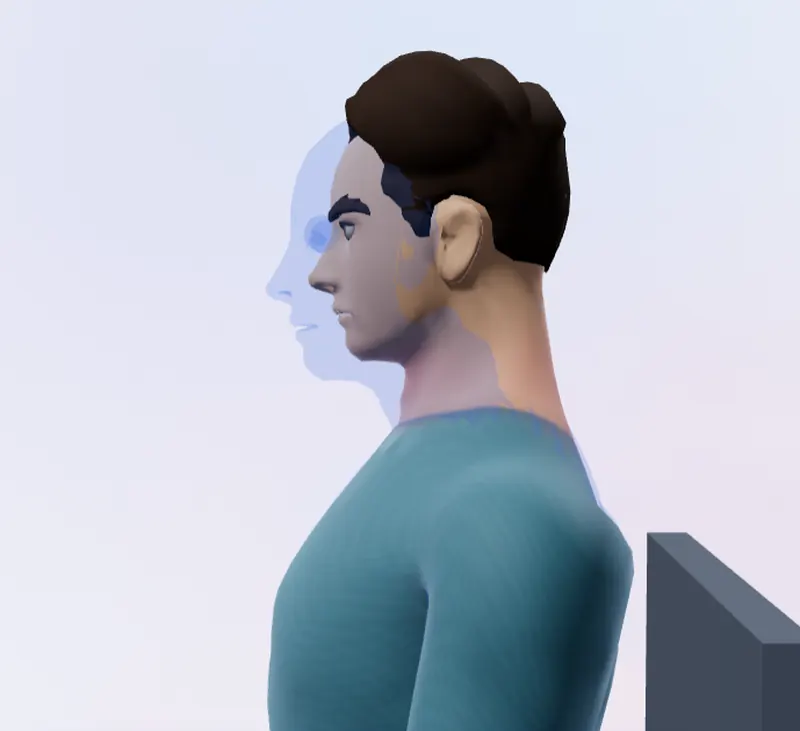 Chin tuck
 Neck side stretch
 Levator scapulae stretch
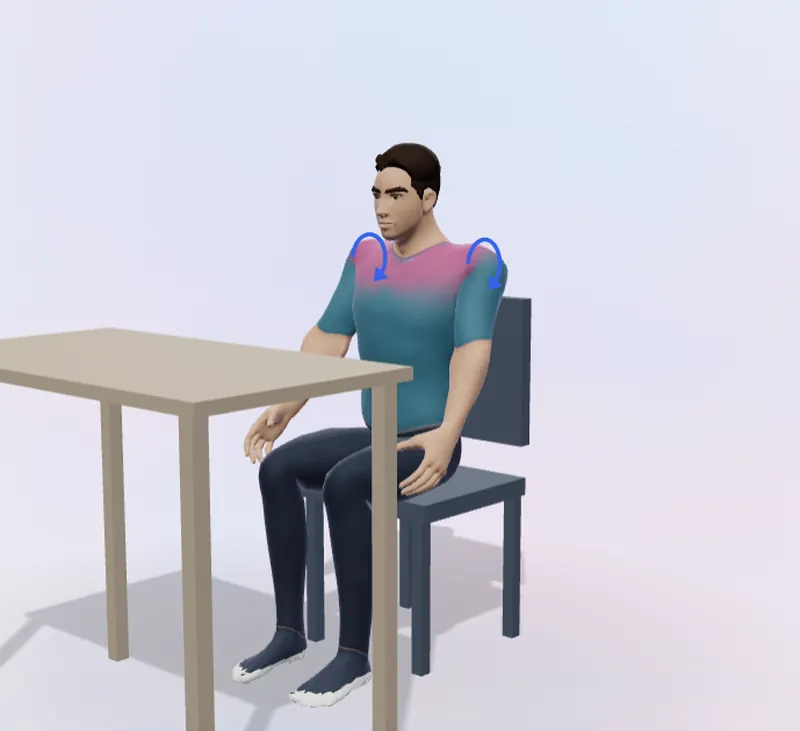 Shoulder rolls
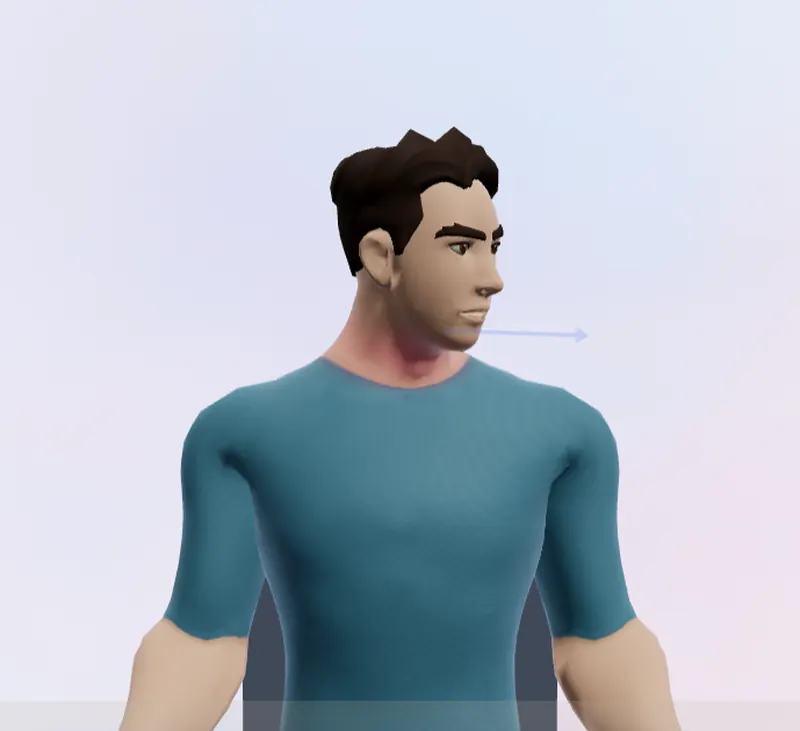 Neck rotation
Upper back & chest
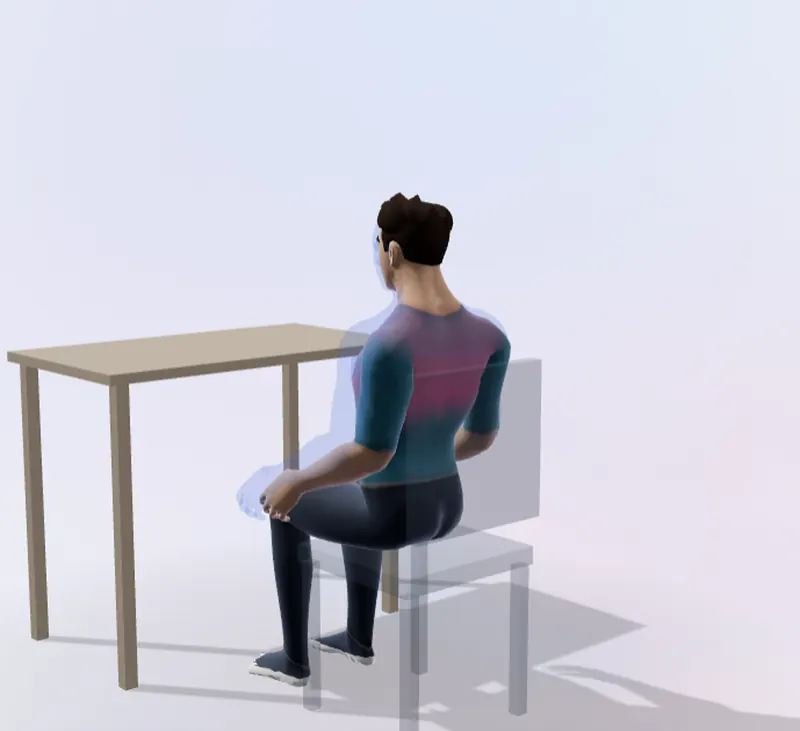 Shoulder-blade squeeze
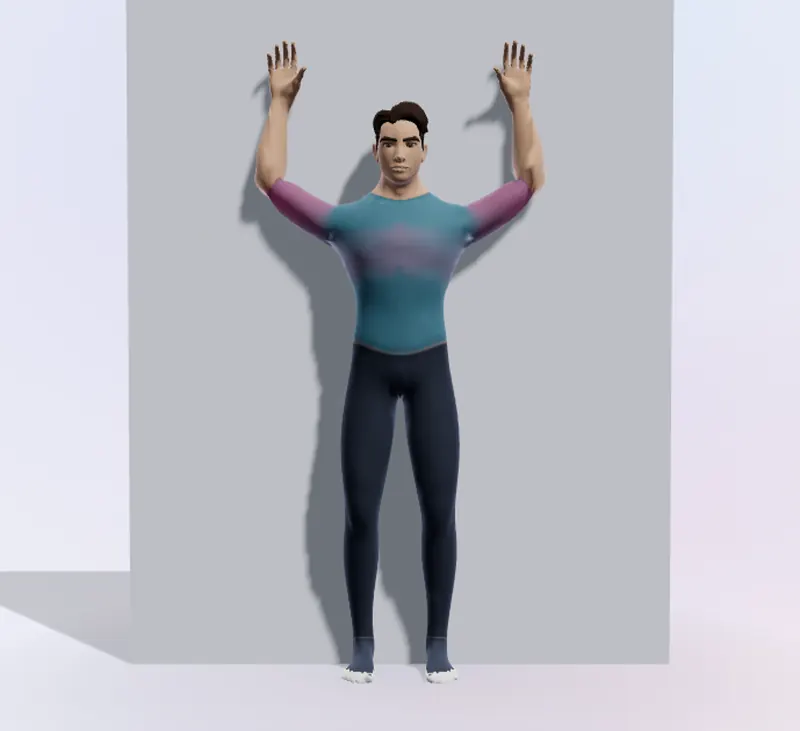 Wall angel
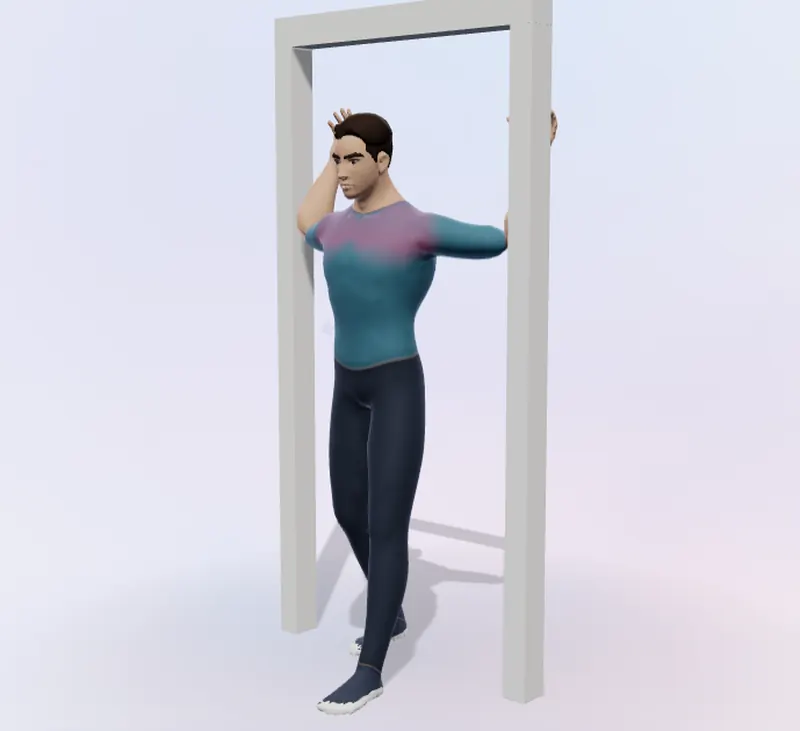 Doorway chest stretch
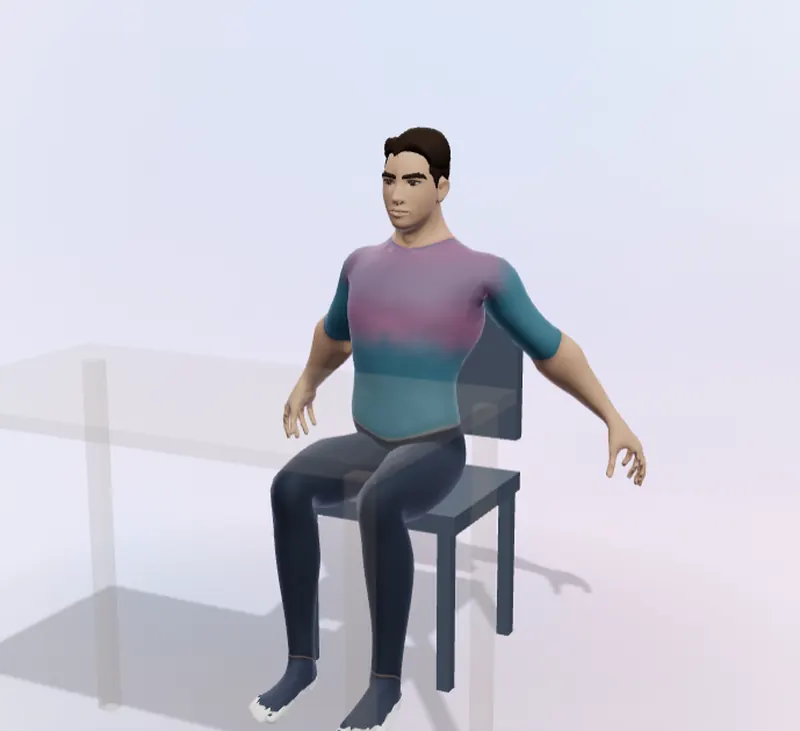 Seated chest opener
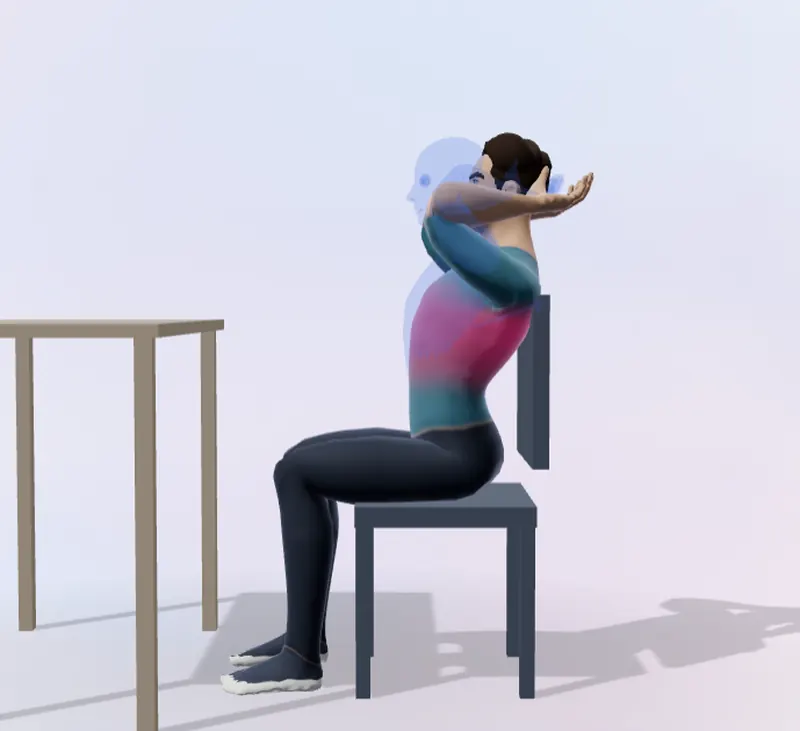 Upper-back extension over the chair
Spine
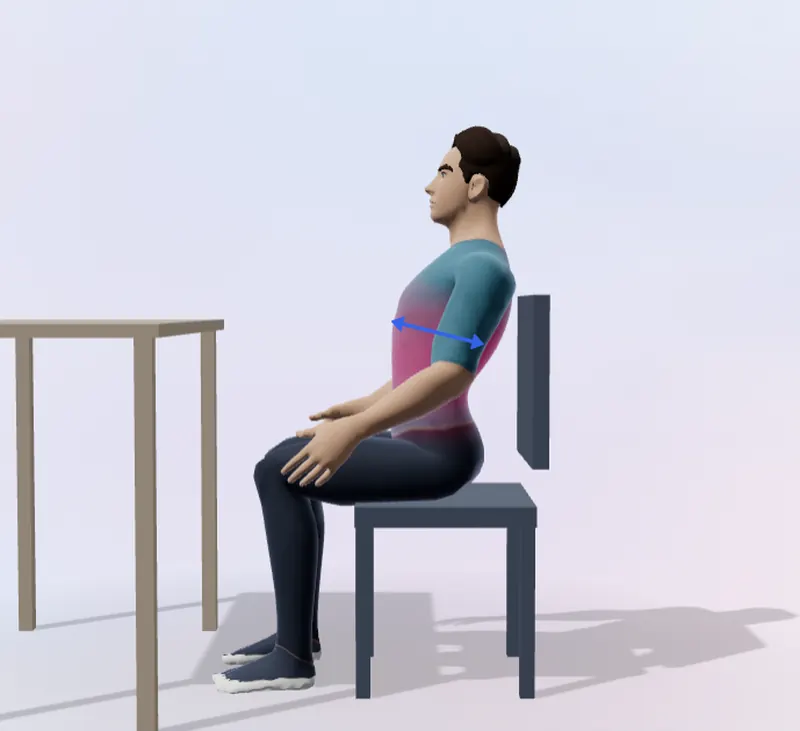 Seated cat-cow
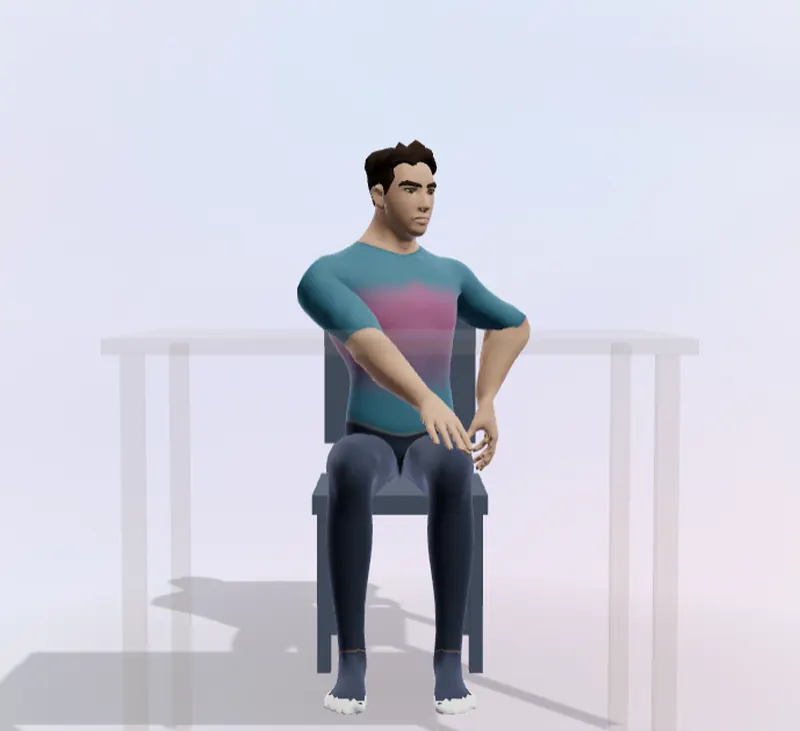 Seated twist
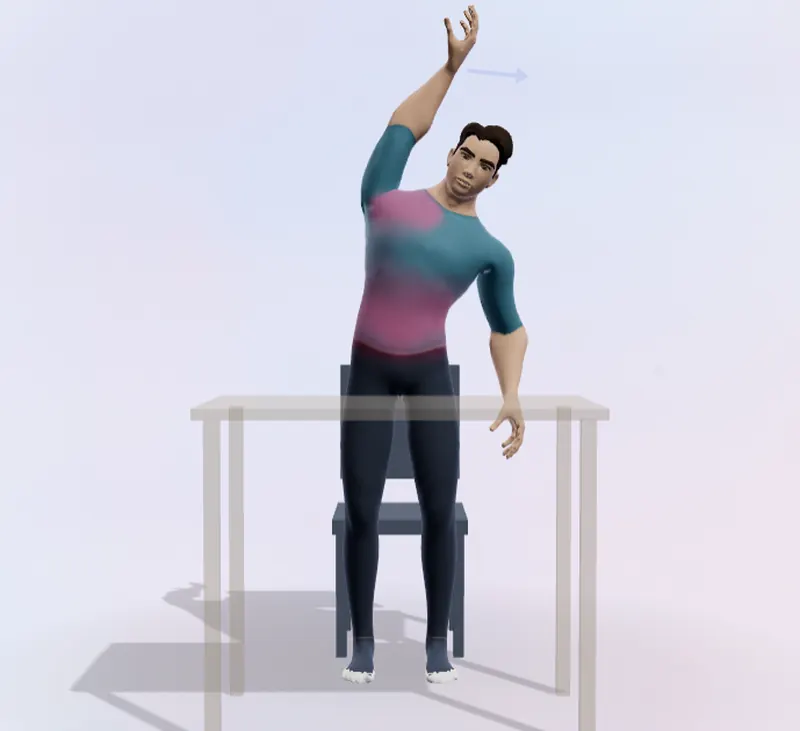 Standing side bend
Hips & legs
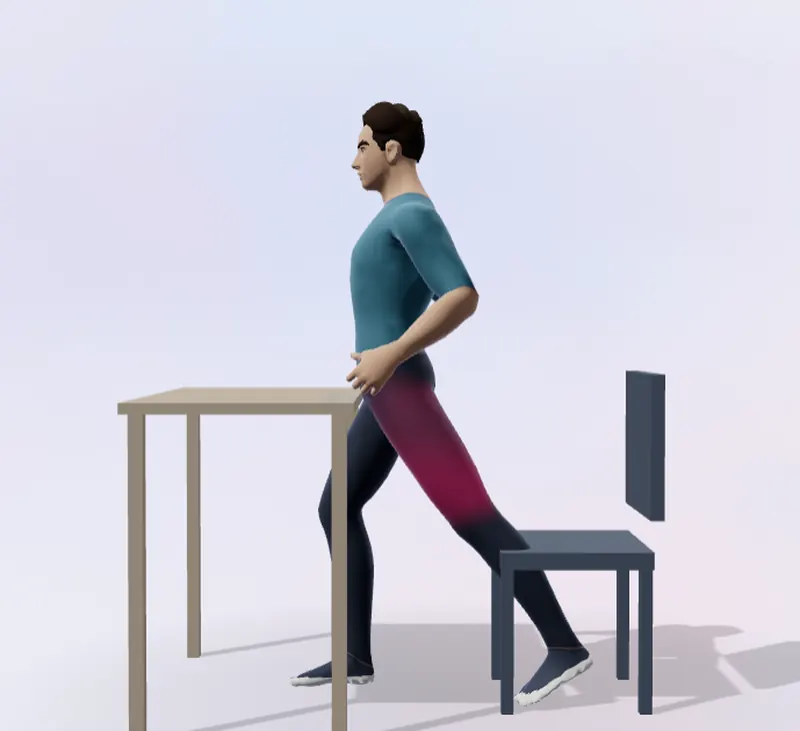 Standing hip-flexor stretch
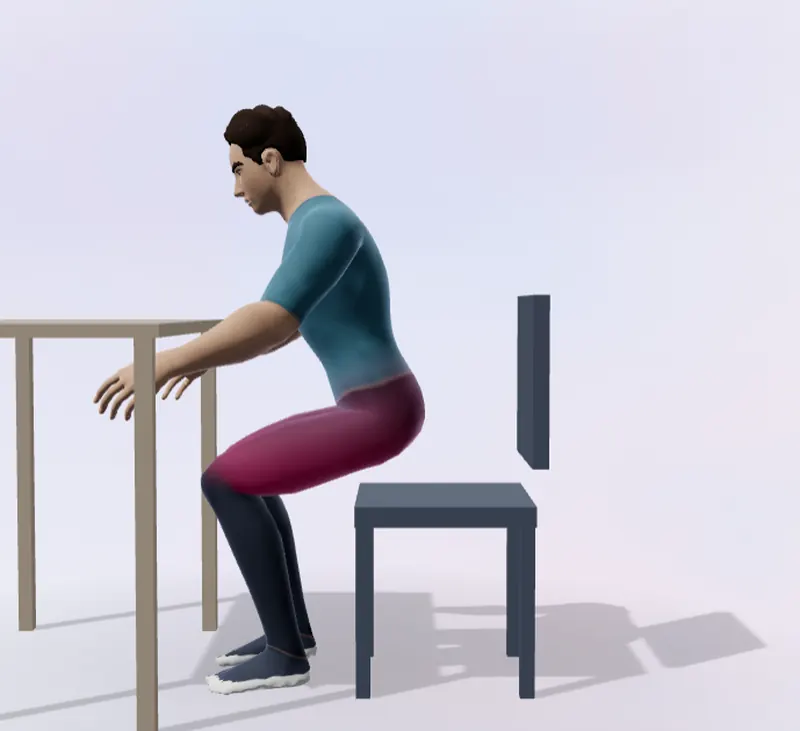 Sit-to-stand
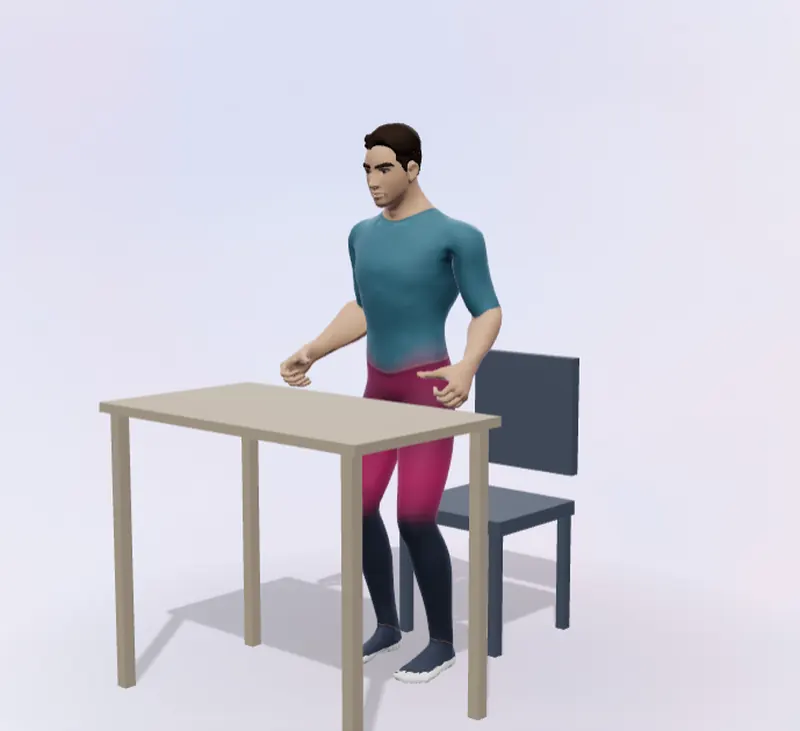 Mini squat
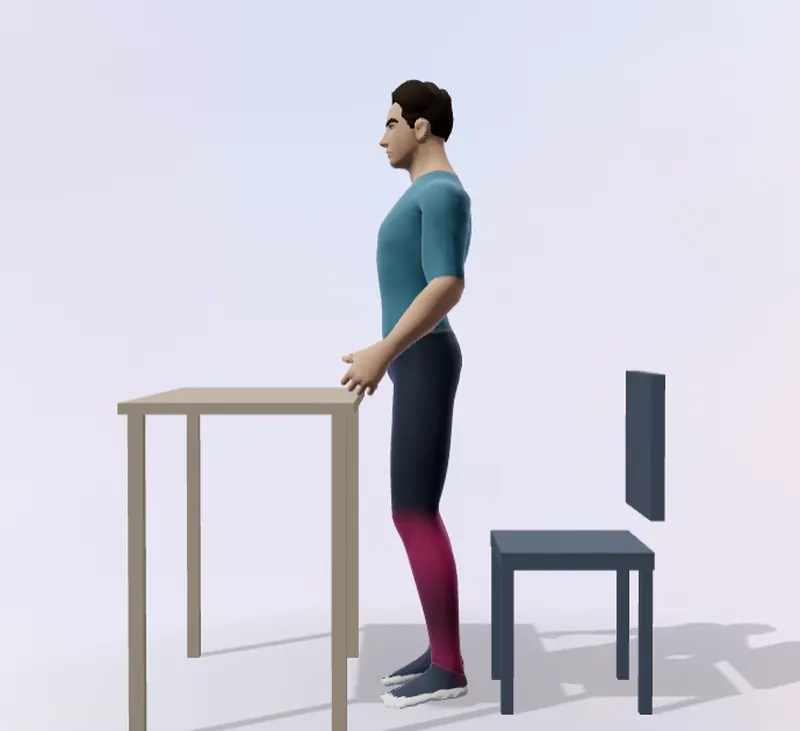 Calf raises
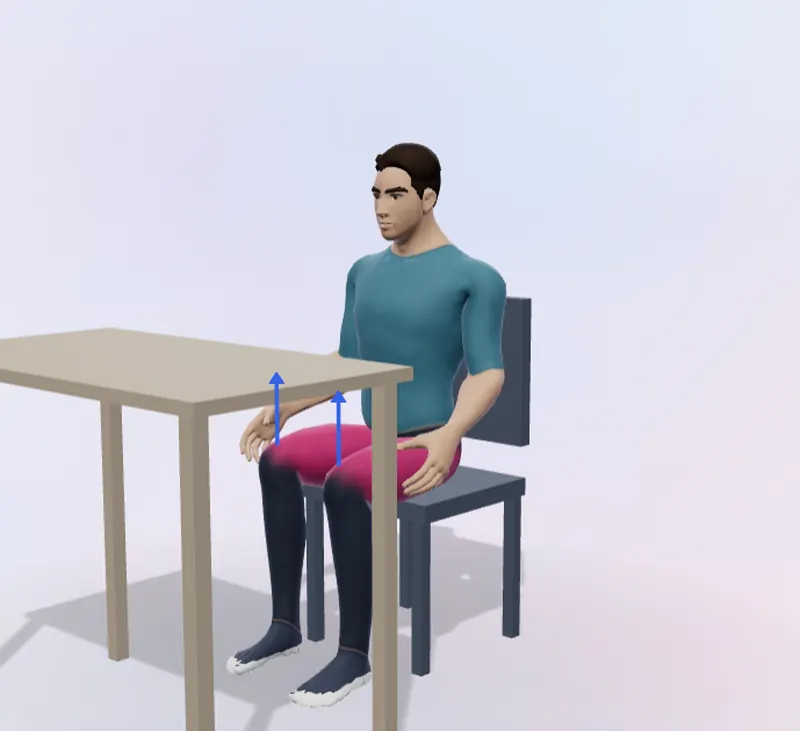 Seated march
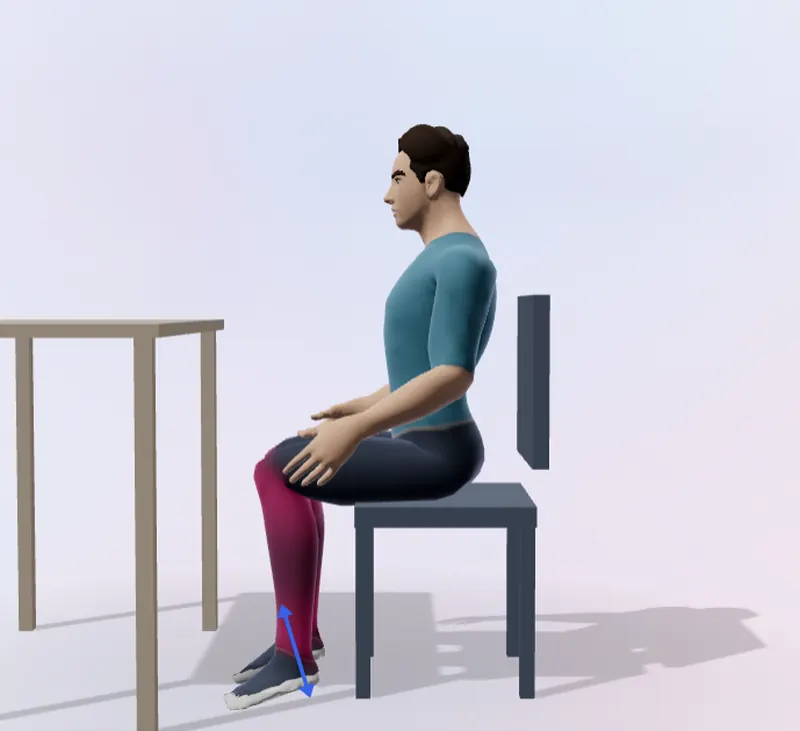 Ankle pumps
Wrists
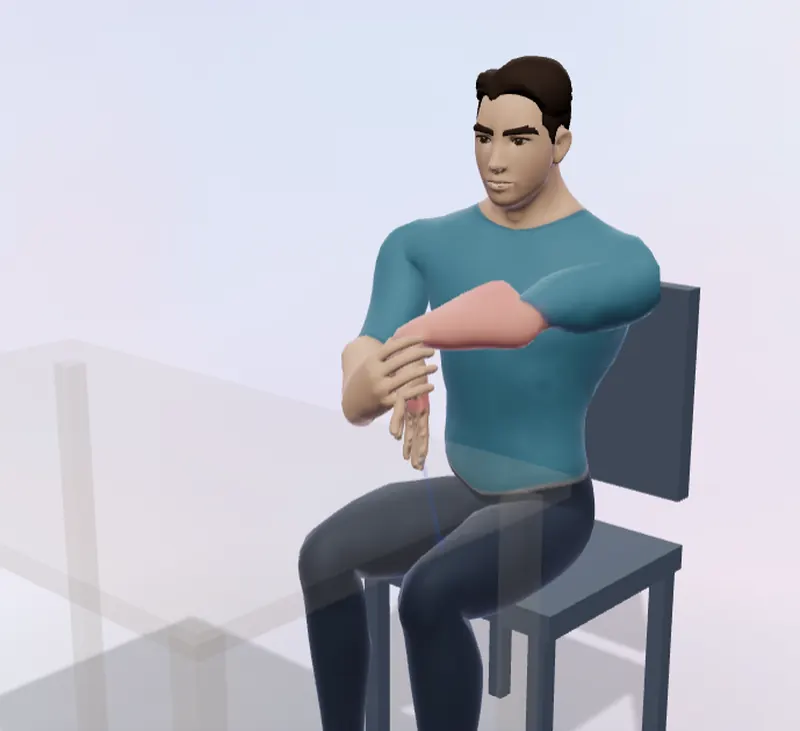 Wrist flexor stretch
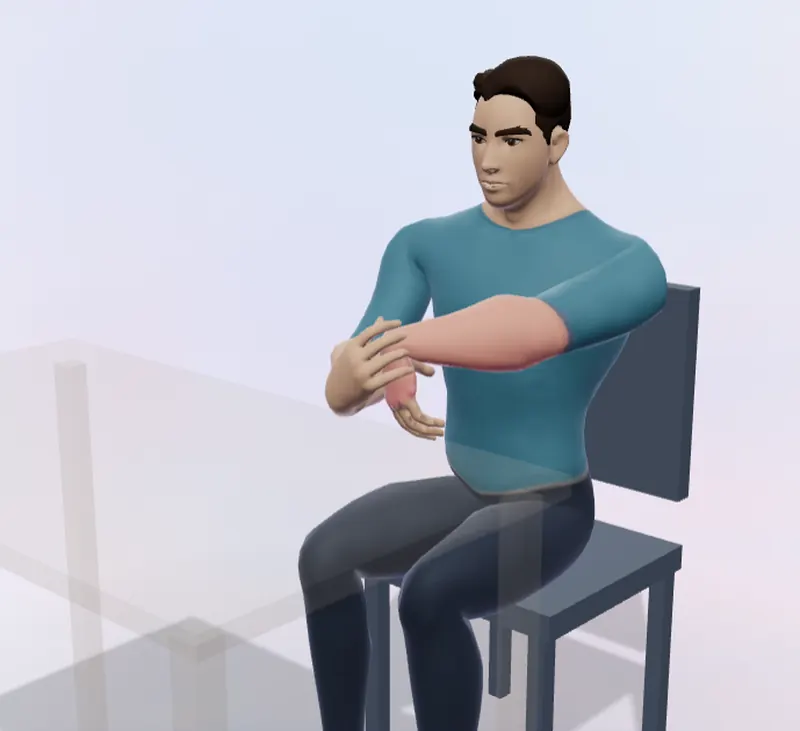 Wrist extensor stretch
Eyes
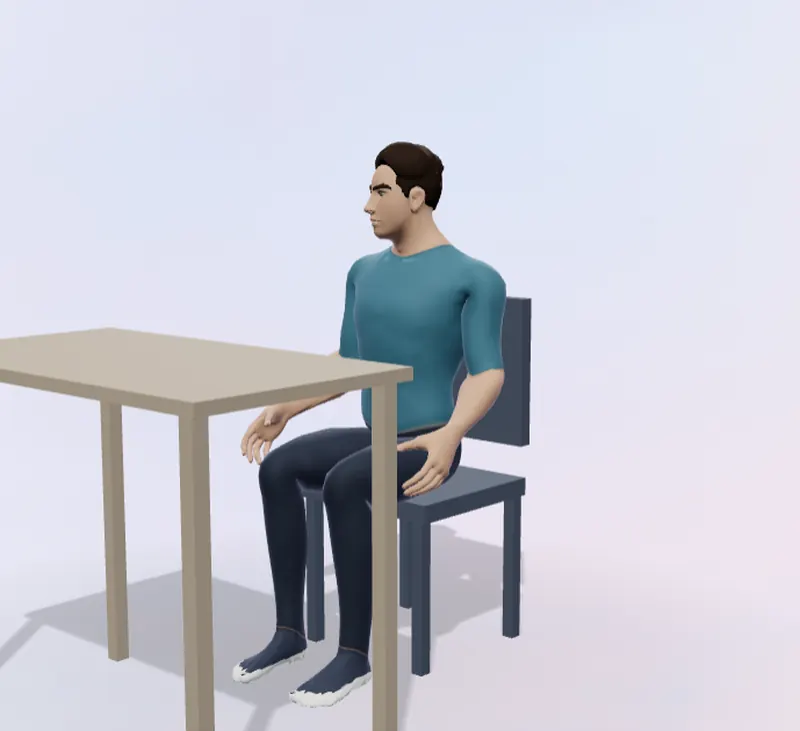 20-20-20 eye break
Whole body
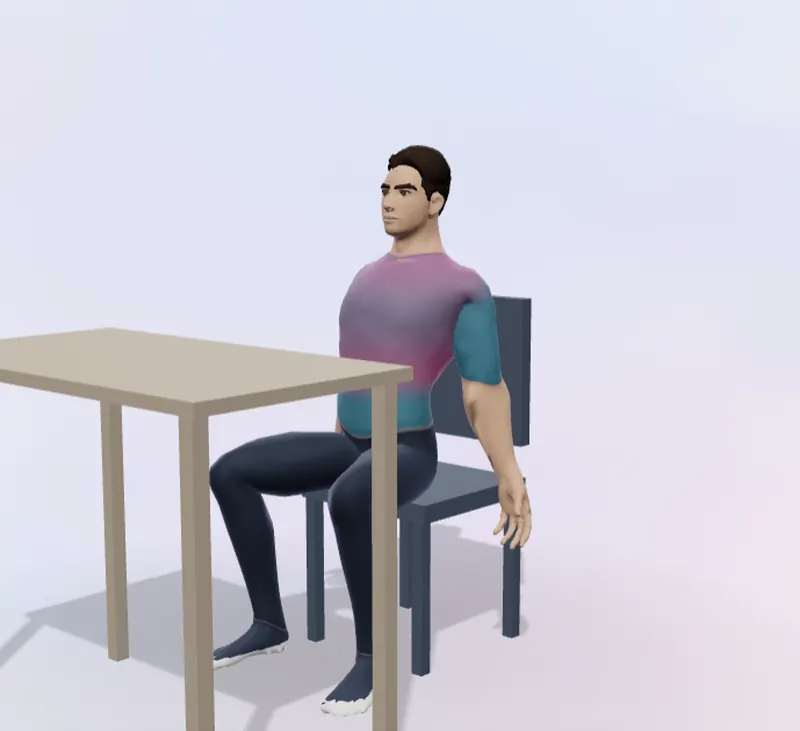 Brügger relief position
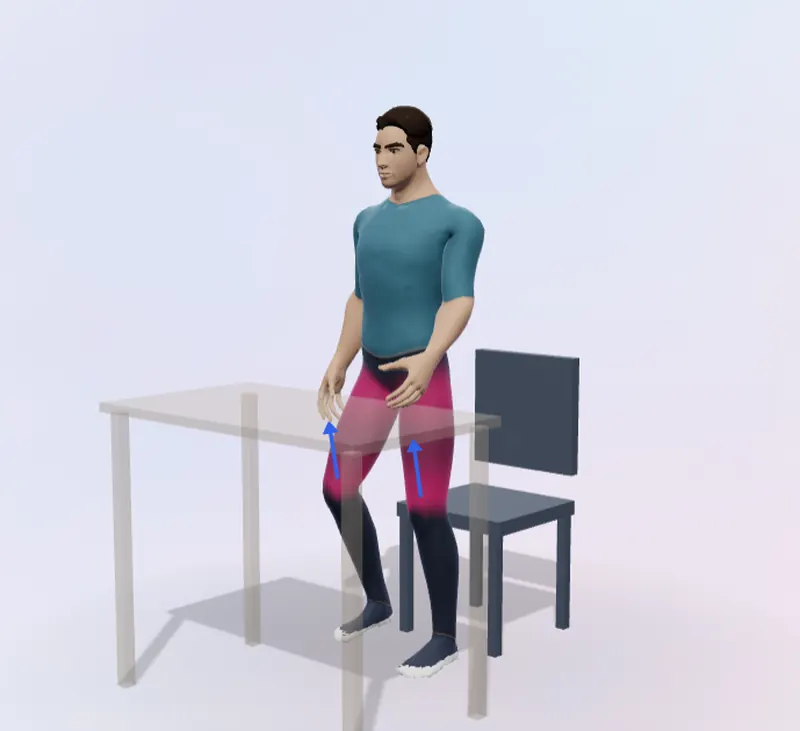 Walk or march
Calm
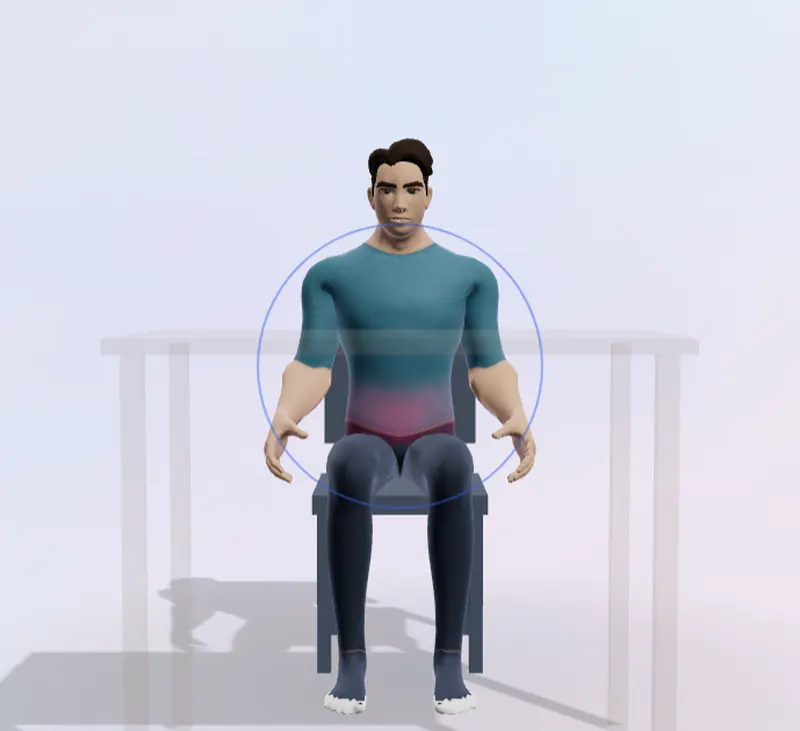 Slow breathing
Why short movement breaks help
- Breaking up sitting every 20–30 minutes with light movement improves blood sugar and insulin after meals, and walking does more than standing. This is the strongest and most consistent finding. (Dunstan et al. 2012, Diabetes Care; Buffey et al. 2022, Sports Medicine)
- In a Columbia University trial, five minutes of walking every 30 minutes was the dose that lowered both blood sugar and blood pressure. (Columbia University Irving Medical Center, 2023)
- Short active breaks of a few minutes can reduce discomfort and fatigue without costing productivity, though the evidence is still low in quality. (Waongenngarm et al. 2018, Applied Ergonomics; Cochrane review CD012886)
- Micro-breaks raise feelings of vigour and lower fatigue. (Albulescu et al. 2022, PLOS One)
- There is no single correct posture. Changing position and moving often matters more than holding a “perfect” one. (Slater, O'Sullivan et al. 2019, JOSPT)
Questions
- How often should I take a movement break at my desk?
- About every 30 minutes. Research on breaking up sitting mostly tests breaks every 20–30 minutes, and doing it regularly matters more than the exact interval.
- How long should a movement break be?
- Two to three minutes is enough for most breaks. In one Columbia University trial, five minutes of walking every 30 minutes had the biggest effect on blood sugar and blood pressure, so a longer walk now and then is worth it.
- Is standing up enough, or do I need to move?
- Moving does more than standing. Studies comparing the two find that light walking improves blood sugar after meals more than standing still does.
- Do I need any equipment?
- No. Every exercise here uses your chair, your desk, a wall or a doorway, and most can be done seated.
- Is there a correct posture to hold?
- Not really. Experts agree there's no single correct posture; changing position and moving often matters more than holding a “perfect” one.